The claw machine has captivated players for decades, drawing millions of dollars in revenue annually and keeping audiences engaged in arcades, entertainment venues, and recreational spaces worldwide. Despite the relatively low odds of winning, people continue to return, spending money repeatedly on the same game. This phenomenon is not random or accidental—it reflects deep psychological principles that tap into fundamental human motivations and cognitive patterns. Understanding why the claw machine exerts such powerful appeal reveals insights into human behavior, decision-making, and the design of engaging experiences.
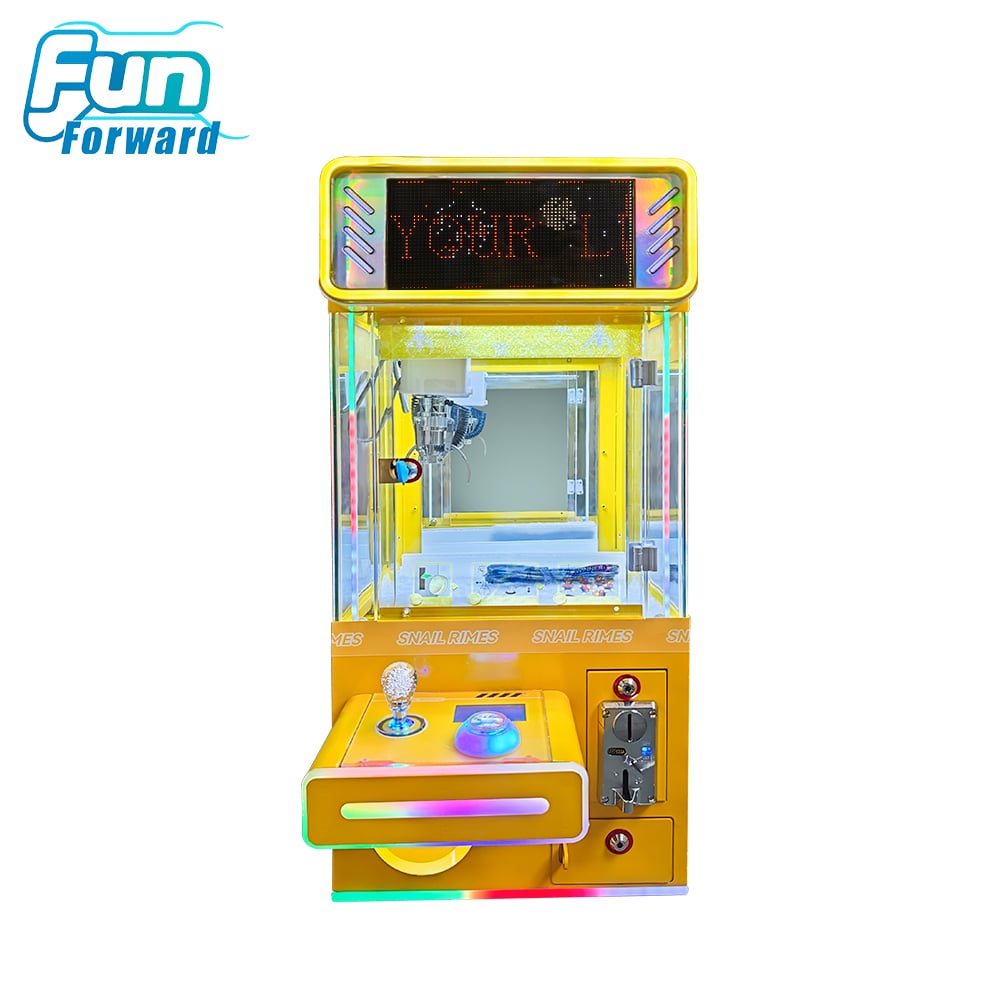
The claw machine operates within a framework of psychological triggers that keep players emotionally invested and motivated to continue play. Each interaction with the claw machine is carefully designed to activate reward pathways in the brain, create moments of hope, and reinforce the belief that success is just one more try away. This article explores the core psychological mechanisms driving claw machine attraction, examining how the combination of skill perception, intermittent reinforcement, and goal proximity creates an irresistible gaming experience.
One of the most powerful psychological factors behind claw machine appeal is the perception of skill and personal control. Unlike purely chance-based games such as slot machines, the claw machine appears to reward direct player action and decision-making. Players position their hands over the controls, adjust the angle and timing of the claw descent, and believe their precision and technique determine the outcome. This illusion of skill is extraordinarily effective because it involves active physical participation rather than passive watching. When a player fails to grab a prize with the claw machine, they often attribute the loss to their own technique rather than the machine's mechanical limitations. This self-attribution pattern reinforces motivation because players believe improvement is possible through practice and better strategy.
The claw machine occupies a unique psychological space by blending genuine skill elements with significant chance factors. A player's positioning, timing, and pressure control do influence outcomes to some degree, yet mechanical unpredictability, wear, and calibration also play major roles. This mixture is psychologically optimal because it maintains hope without requiring genuine mastery. Players experience just enough success—occasional wins or near-misses—to keep believing that skill matters. Research in behavioral psychology shows that when people feel partial control over outcomes, they engage more persistently than with purely random events. The claw machine's design leverages this principle perfectly, creating a sweet spot where players believe their actions matter while the machine retains enough mechanical variability to ensure continuous challenge.
The claw machine employs a psychological reinforcement pattern known as variable ratio scheduling, which is the most addictive reward structure identified in behavioral science. Unlike fixed rewards that come after a predictable number of actions, the claw machine delivers prizes at unpredictable intervals, creating powerful motivation loops. Players never know if the next attempt will succeed, which paradoxically increases engagement compared to scenarios with predictable outcomes. This same principle explains why slot machines and gambling are so compelling—the brain's reward system becomes highly sensitized to uncertainty. When a claw machine player finally wins after multiple failures, the unpredictable nature of that success triggers a dopamine surge far more intense than a guaranteed reward would produce. The claw machine's design intentionally activates this neurochemical response, creating a cycle of anticipation and brief satisfaction that drives repeated play.
The near-miss is perhaps the most psychologically potent feature of the claw machine experience. A near-miss occurs when the claw machine nearly succeeds in grabbing a prize—the claw descends, the player feels the tension of possibility, and at the last moment the prize slips away. From a pure probability standpoint, a near-miss is no different from a complete failure; the player still loses money and receives no prize. Psychologically, however, near-misses with the claw machine are far more motivating than distant failures. Players who experience near-misses report increased commitment to continue playing, stronger beliefs that victory is imminent, and greater willingness to spend additional money. The claw machine's mechanical design often amplifies near-misses deliberately—the claw may seem to grasp the prize securely before releasing it at the final moment. This design choice is not accidental; it reflects understanding that near-misses create stronger psychological hooks than clean failures.
The claw machine's prize display plays a crucial psychological role in maintaining player engagement and motivation. Unlike abstract games where players accumulate points or digital rewards, the claw machine features physical, visible prizes displayed within arm's reach. Players can see the exact prize they might win, touch the machine glass, and select their target before beginning play. This visibility creates what psychologists call 'goal proximity'—the psychological sense that a desired outcome is near and achievable. When a player selects a stuffed animal or specific prize and positions it within the claw machine's reach, that prize becomes psychologically real and desirable in a way distant or abstract rewards cannot match. The claw machine leverages this principle by making prizes prominent, attractive, and individually selectable, transforming the game from abstract chance into concrete possibility.
Once a player has invested money in the claw machine, psychological loss aversion becomes a powerful motivator for continued play. Humans are significantly more motivated to avoid losses than to achieve equivalent gains—a principle called loss aversion that shapes decision-making across contexts. When someone has played the claw machine three times without winning, they may feel their prior investment is 'wasted' unless they eventually succeed. This perception triggers the sunk-cost fallacy, where players continue investing hoping to recoup prior losses, even when the mathematically rational choice is to stop. The claw machine's low cost per play—often one to five dollars—makes this psychological trap particularly effective because players can rationalize continued investment as 'only a few more attempts.' However, these cumulative small decisions often result in significant total spending. The combination of goal proximity with visible progress toward a prize creates a powerful narrative where 'one more try' feels like a rational choice rather than a costly decision.
The claw machine operates within social environments—arcades, entertainment centers, family entertainment venues—that amplify its psychological appeal. Watching other players attempt the claw machine, celebrating when someone succeeds, and experiencing friendly competition creates social reinforcement that extends beyond the individual game mechanics. When a player wins at the claw machine, they receive tangible recognition from peers and can physically display their prize, providing social status and validation. This social dimension is particularly powerful for younger players and families, where winning a prize from the claw machine becomes a memorable shared experience. The claw machine's public nature transforms it from a simple game into a social event where spectators become part of the emotional experience. Conversely, failures are softened by the social acceptance that the claw machine is notoriously difficult—losing at the claw machine is not perceived as personal failure but as a normal encounter with a challenging machine.
Every interaction with the claw machine creates a narrative arc of emotional tension and potential resolution. A player inserts money, positions their hands, lowers the claw, and holds their breath as the mechanism attempts to grasp the prize. This moment of uncertainty generates genuine emotional engagement that extends far beyond the monetary stakes. The claw machine's mechanical slowness—the deliberate pause between button press and claw descent—is not incidental; it maximizes emotional tension. If the claw machine operated instantaneously, the experience would feel empty and unsatisfying. Instead, the prolonged descent, the moment of contact with the prize, and the suspenseful return to the top create an emotional journey. For players, this emotional engagement is often more rewarding than the actual prize itself. Many claw machine players report feeling disappointed when they win too easily, suggesting that the tension and uncertainty drive enjoyment more than success alone.
People continue playing the claw machine because of intermittent reinforcement schedules combined with the illusion of skill. Players believe their technique and positioning matter, creating perceived control over outcomes. Occasional wins and near-misses reinforce the belief that the next attempt might succeed, activating dopamine-driven reward cycles that override rational cost-benefit analysis. The sunk-cost fallacy also plays a role—once money is invested, players feel motivated to continue hoping to recoup losses through eventual victory.
The claw machine design incorporates multiple psychological optimization strategies. Visible prizes create goal proximity, mechanical slowness maximizes emotional tension, near-misses are engineered into the experience, and difficulty is calibrated to be challenging but not impossible. The public setting amplifies social reinforcement, while the low cost per play enables the sunk-cost trap to develop gradually. Every mechanical feature—the claw's grip strength, descent speed, and prize positioning—reflects understanding of human psychology rather than random design choices.
The claw machine shares several psychological mechanisms with gambling, including variable reinforcement schedules and near-miss effects, but operates within different regulatory and financial contexts. While the claw machine can create compulsive play patterns, the relatively low cost per interaction and culturally normative status as family entertainment distinguish it from regulated gambling. However, the underlying psychological principles—reward anticipation, loss aversion, and intermittent reinforcement—are fundamentally similar, meaning understanding claw machine psychology provides insights into addiction mechanisms generally.

Copyright © Guangzhou Fun Forward Technology Co., Ltd - Privacy policy
 EN
EN