Claw machines are one of the most recognizable forms of interactive arcade entertainment. A typical machine combines a transparent cabinet, a motorized crane, a claw mechanism, a control panel, and a prize area. The rules are easy to understand: players move the claw into position, lower it, and try to guide a prize toward the collection chute.
Although the basic idea is simple, claw machines have changed considerably over time. Early mechanical crane games were inspired by industrial digging equipment. Later models introduced electric controls, adjustable mechanisms, themed cabinets, electronic payment systems, digital displays, and network connectivity. In many markets, the machines have also moved beyond traditional arcades into shopping malls, cinemas, restaurants, retail stores, family entertainment centers, and online services.
This article explains the history of claw machines, the development of the modern crane game, and the main trends influencing their popularity around the world.
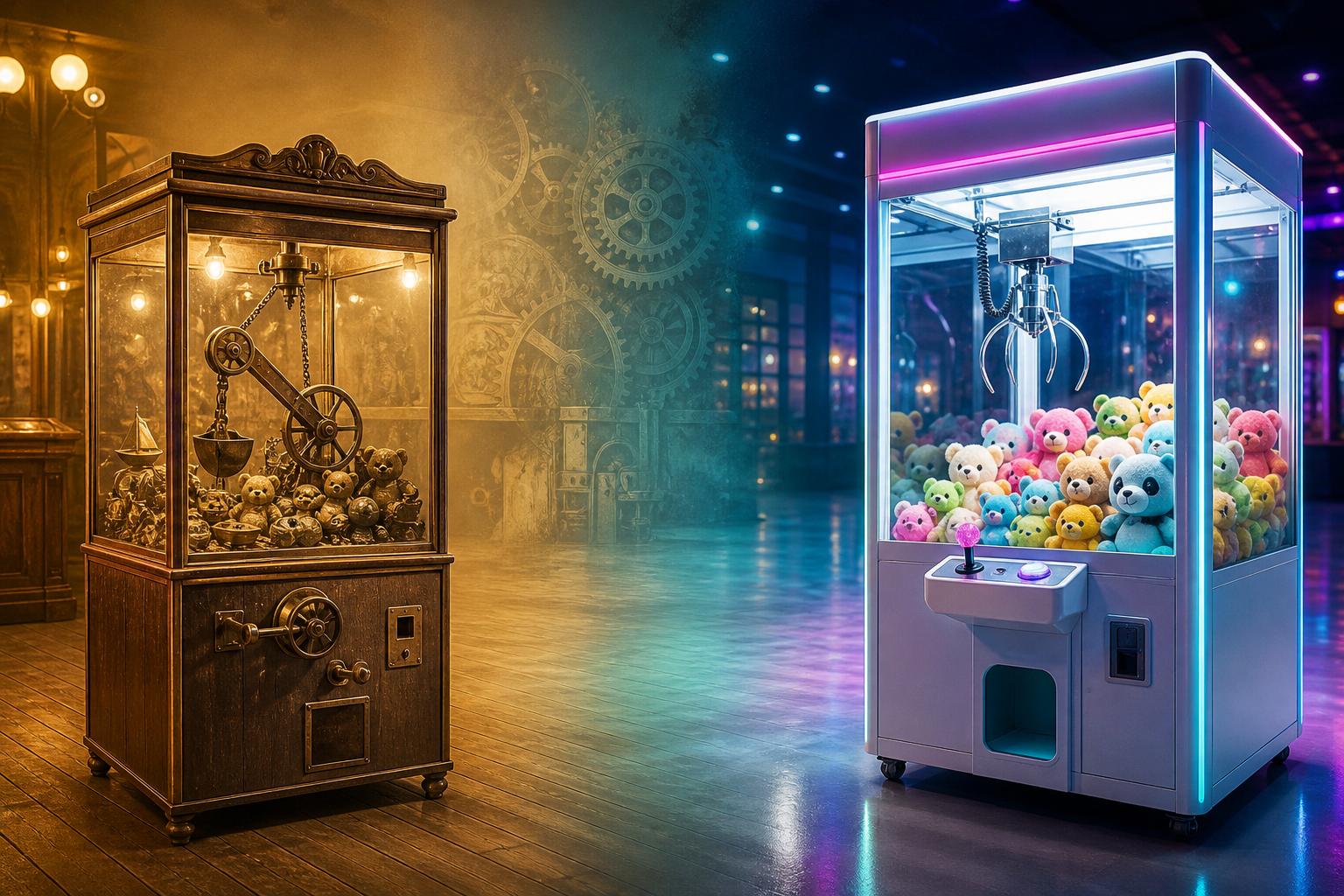
The exact origin of the claw machine is sometimes described differently in historical accounts. Some references connect early mechanical grabber concepts with the late nineteenth century, while the first well-documented commercial crane games are generally associated with the 1920s.
One well-known early example is the Erie Digger, a countertop machine designed to resemble a small steam shovel. Its industrial appearance reflected the public fascination with large construction and excavation equipment. Instead of using a modern joystick and electronic control board, early machines relied mainly on mechanical components. A player operated the mechanism and attempted to move the small digging arm toward a prize.
These early machines were important because they introduced several features that still define claw games today:
The early machines were not identical to the large plush-toy cabinets commonly seen today. They were more mechanical, often smaller, and sometimes used candy or small objects as prizes. However, the central interaction was already present: the player controlled a moving device and tried to retrieve something from inside an enclosed case.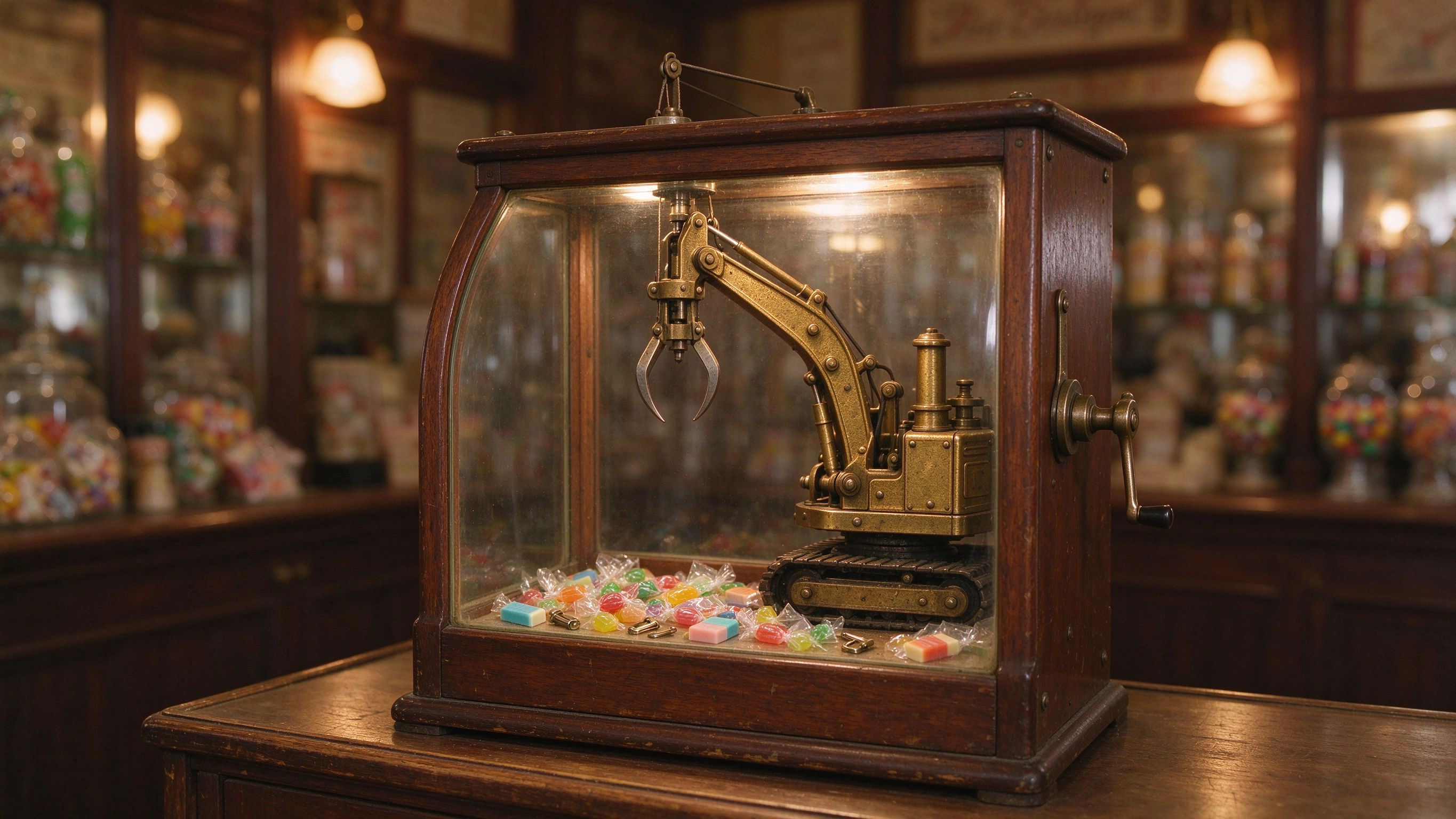
As amusement equipment developed, crane games gradually became more suitable for commercial entertainment venues. Electric motors made movement smoother and allowed manufacturers to create larger cabinets. Improvements in controls, lighting, wiring, and prize presentation also made the machines easier to operate in busy public locations.
The cabinet became part of the attraction. A transparent front allowed people nearby to see the prizes, watch other players, and understand the game without lengthy instructions. This visual quality helped claw machines work well in locations where customers were walking past rather than visiting specifically to play.
The prize also became more important. Instead of treating the prize as a minor part of the machine, operators and manufacturers began to use it as a central part of the customer experience. Plush toys, character items, accessories, novelty products, and seasonal merchandise could all change the appearance of a machine and give customers a reason to return.
This development created a flexible entertainment format. The same basic cabinet could be adapted for children, families, collectors, tourists, or general arcade visitors simply by changing the prize selection and visual theme.
Japan played an important role in shaping the modern public image of crane games. In Japan, crane games are widely associated with the term “UFO Catcher,” a name connected with Sega’s product line introduced in 1985. The name came from the visual resemblance between the claw mechanism and a flying saucer.
According to reporting by The Japan Times, Sega’s first UFO Catcher was initially designed with women and children in mind. At the beginning, the machines did not immediately attract strong attention because the available prizes were not especially appealing. A major change occurred when manufacturers and arcade operators began offering more desirable character-related products and higher-quality plush items.
This change illustrates an important principle in claw machine history: the machine and the prize work together. Good cabinet design can attract attention, but prize relevance often determines whether visitors decide to play. In Japan, operators also developed more varied play methods. Instead of relying only on a direct grab, players could move, roll, push, or reposition prizes using different claw techniques.
Over time, Japanese arcades refined several aspects of the experience:
These practices helped crane games become a major part of the arcade experience in Japan and influenced operators in other countries.
Claw machines spread internationally because they are easy to understand, visually engaging, and adaptable to different locations. A visitor does not need to know a particular language to understand the basic goal. The transparent cabinet shows the prizes, the controls are usually simple, and one play can be completed within a short period.
Different regions have developed their own preferences. Prize size, product category, price level, cabinet design, and payment habits can vary from one market to another. For example, some audiences may prefer character goods and collectible accessories, while other audiences may respond more strongly to large plush toys or practical novelty products.
The international appeal of claw machines is also connected to location flexibility. Operators can install them in:
This flexibility allows the format to serve both dedicated entertainment venues and businesses that want to add an interactive attraction to an existing customer experience.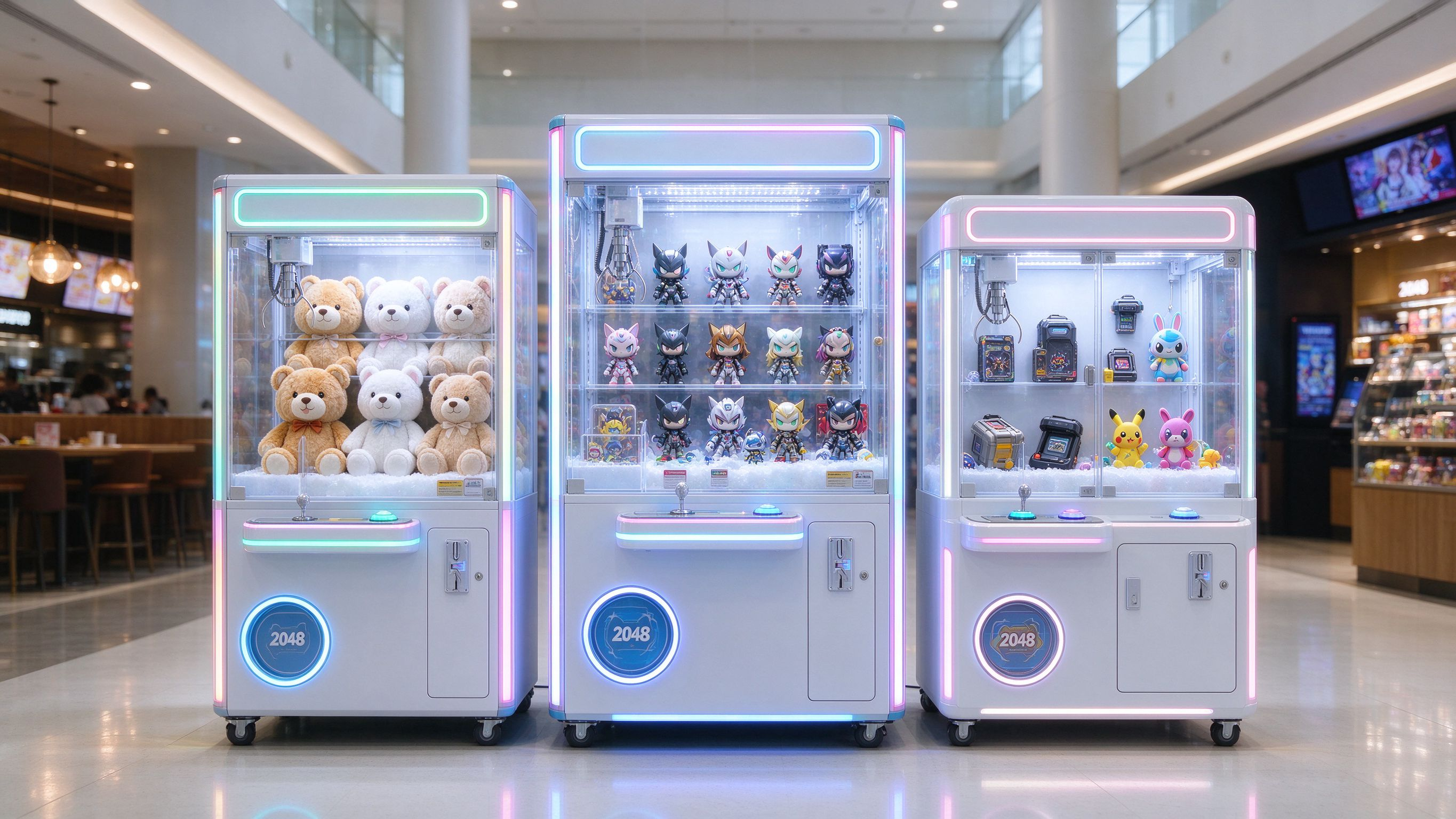
One of the clearest trends is the expansion of claw machines into mixed-use commercial spaces. They are no longer limited to large arcades. Smaller units can fit into retail stores, restaurants, entertainment centers, and family-oriented venues.
For operators, the key considerations are visibility, customer flow, available floor space, prize suitability, and maintenance access. For venue owners, a machine can provide an additional interactive activity without requiring a large dedicated game area.
Modern players often look for a specific type of prize rather than simply playing for any available item. This has increased interest in themed collections, seasonal products, collectible goods, and locally relevant merchandise.
A well-planned prize program can make a machine feel refreshed without changing the cabinet itself. Operators may rotate products for holidays, school breaks, cultural events, or new entertainment releases. However, prize selection should always follow applicable local rules, safety requirements, and intellectual-property permissions.
Digital payment systems, electronic counters, remote monitoring, and networked management tools are changing how operators manage machines. Cashless payment can make the play process more convenient, while remote data can help operators monitor machine status and identify service needs.
Some modern systems also support connected or online crane-game services, allowing players to control a machine remotely and arrange prize delivery. This creates a different experience from visiting a physical arcade, but it extends the reach of the crane-game format beyond a single venue.
Claw machines are naturally suited to short-form video because the action is easy to record. A successful grab, an unusual prize arrangement, or a creative machine design can encourage viewers to share the experience online.
This does not mean every machine will become widely shared. Social content works best when the machine is visually clear, the prize is appealing, and the result is easy to understand. For businesses, original photos and videos can also help customers discover a venue before visiting.
Commercial venues are paying closer attention to the relationship between floor space and customer engagement. This has encouraged demand for compact cabinets, multi-player formats, double-layer machines, and designs that display prizes clearly while using available space efficiently.
The right format depends on the venue. A large cabinet may create a stronger visual presence, while a compact cabinet may be easier to place in a smaller retail or entertainment area. The decision should consider customer access, service clearance, electrical requirements, safety, and the expected audience.
A modern claw machine is not only a mechanical device. It is part of a complete experience that includes product presentation, clear instructions, payment convenience, staff support, cabinet cleanliness, and prize collection.
Operators who monitor customer feedback can often identify improvements that are not obvious from revenue data alone. For example, a prize chute may need better visibility, a control panel may need clearer instructions, or the prize bed may need to be rearranged for easier understanding.
The future of claw machines is likely to combine physical play with digital management. Hardware will continue to evolve through improved controls, more efficient lighting, cashless payment compatibility, stronger monitoring functions, and flexible cabinet layouts.
At the same time, the basic appeal will remain familiar. People enjoy a short challenge, a visible goal, and the possibility of taking home a prize. The most successful machines will probably be those that balance attractive presentation with a clear, understandable, and well-maintained experience.
The industry will also need to respond responsibly to local requirements. Rules related to prizes, payment systems, age suitability, electrical safety, accessibility, and consumer protection can vary by country or region. Businesses should review local requirements before installing or operating equipment.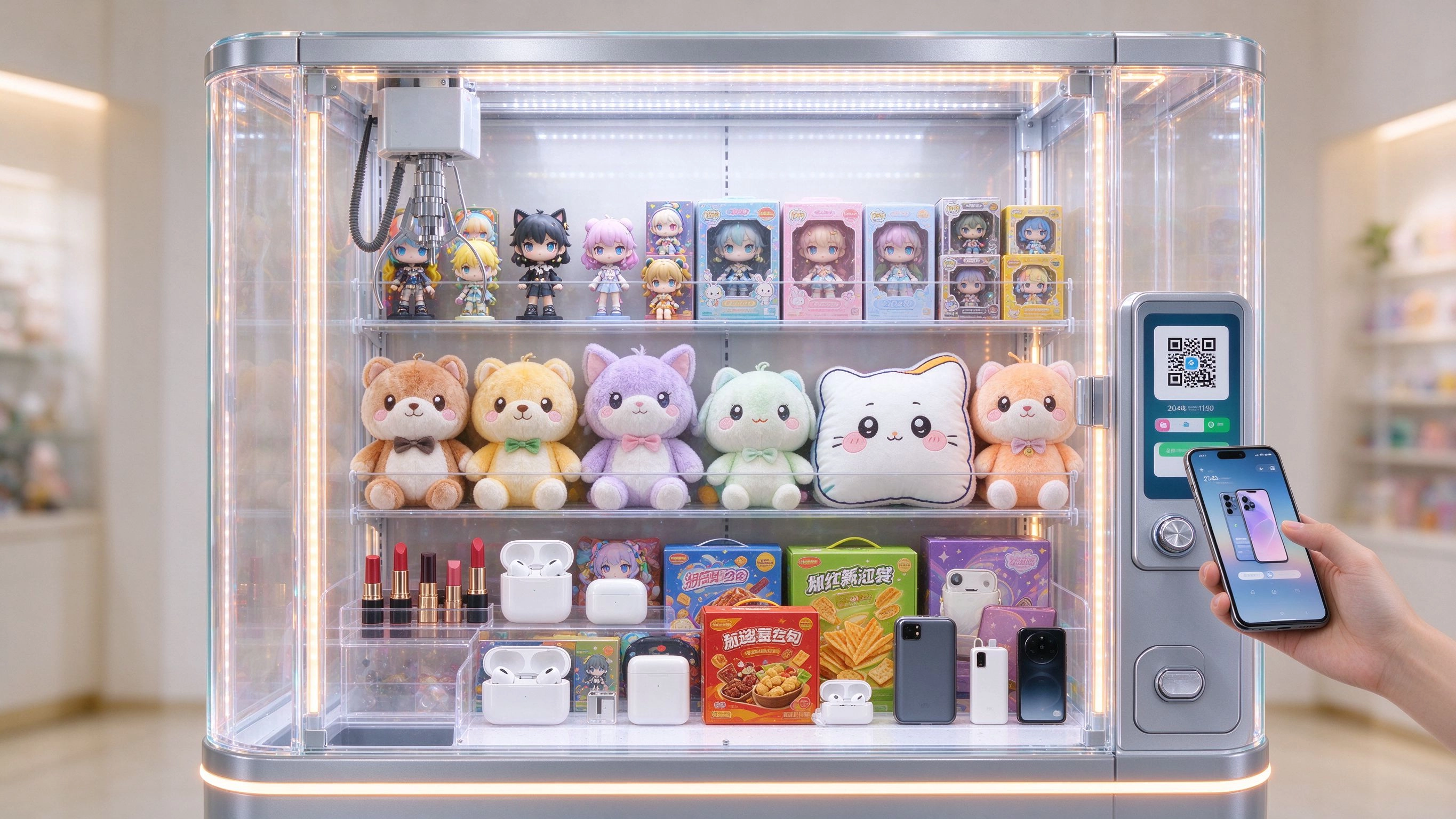
The history is not described identically in every source. Early grabber concepts are sometimes linked to the late nineteenth century, while the Erie Digger and other documented mechanical crane games are associated with the 1920s.
A crane game is an amusement machine in which a player controls a mechanical crane or claw to move and attempt to retrieve a prize from inside a cabinet. “Claw machine” and “crane game” are commonly used to describe similar equipment.
They are visually clear, simple to learn, adaptable to many prize categories, and suitable for both dedicated arcades and mixed-use commercial locations. Their short play cycle also makes them easy to add to a wider entertainment experience.
“UFO Catcher” is a term strongly associated with Sega’s crane-game product line introduced in Japan in 1985. In Japan, the term is also commonly used in everyday conversation to refer broadly to crane games.
Yes. Current development includes cashless payment, remote monitoring, connected services, new cabinet layouts, improved prize presentation, and more varied game configurations. The central concept remains the same, but the surrounding technology and operating model continue to change.
The history of claw machines shows how a simple mechanical idea can develop into a flexible global entertainment format. From early steam-shovel-inspired machines to modern cabinets with digital payments and connected management, the category has changed in response to technology, prize design, venue needs, and customer preferences.
Its continued popularity comes from a combination of simplicity and variety. The rules are easy to understand, while the prizes, cabinet designs, play methods, and operating environments can be adapted for different audiences. As arcades, retail spaces, family entertainment venues, and online platforms continue to develop, claw machines are likely to remain a visible part of interactive entertainment.
For businesses considering this equipment, the most practical approach is to evaluate the target audience, venue layout, prize plan, payment method, maintenance process, and local requirements together. A machine becomes more valuable when it is treated not as a standalone cabinet, but as part of a complete and reliable customer experience.

Copyright © Guangzhou Fun Forward Technology Co., Ltd - Privacy policy
 EN
EN